It is fashionable to criticize seminary training.
For example, Peter DeHaan argues that “Seminary delays ministry!” That is, the years you invest in training, are years wasting God’s time.

He writes: “If God actually tells you to go to seminary, then go. Otherwise just start serving him and leave the advanced education to the academics. Jesus is all you need. And that’s the truth about seminary.” [1]
If it weren’t written by a serious person, I might have wondered if the article was meant to be ironic. He has a PhD – but turns out it comes from the non-accredited Trinity College of the Bible and Theological Seminary. (And here is another man who is certain that seminary is the path to spiritual death and Phariseeism [2]; my brief reaction: I never met a person who was spiritually shipwrecked because they knew too much!)
I won’t offer a blow-by-blow refutation of his article, most of which would sound like, “Yes, but you are attacking a straw man!”
Now, seminary is much more expensive than it was when I went. And my experience is now forty-plus years old, so I cannot comment on current education in the US. But I doubt everything changed that much.
My history: I attended Philadelphia College of Bible, majoring in Bible and Pastoral Studies. I eventually took a PhD in New Testament Exegesis from Aberdeen University (an accredited little outfit, it was founded the year Columbus was making his second voyage!).
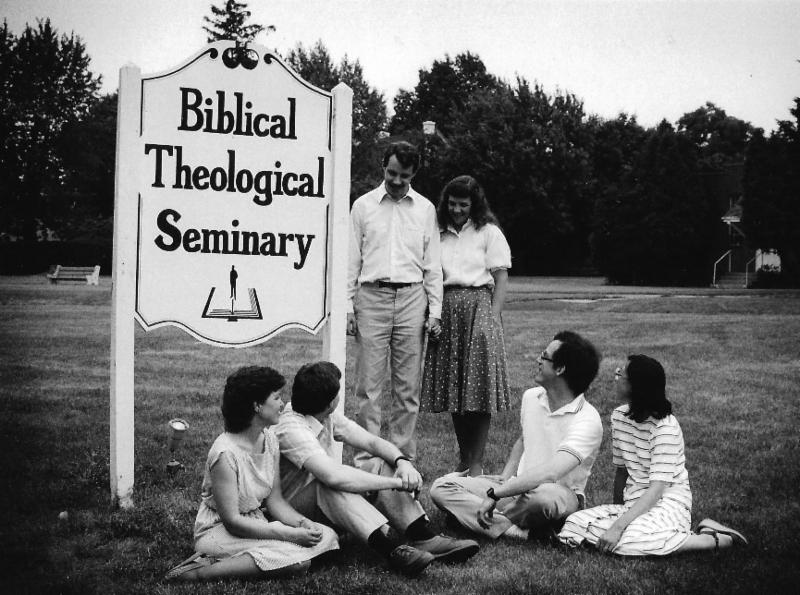
My seminary training: a three-year fulltime Master of Divinity from Biblical Theological Seminary (BTS), Hatfield, Pennsylvania, from 1980-83. I had examined a number of seminaries: Dallas, Western CB, Denver and others. But after attending classes for a day at BTS I was impressed by the content and with the quality of the teachers: in this case, Robert Vannoy for Old Testament and Bob Dunzweiler for Apologetics. I immediately applied and was accepted.
Was the experience perfect? No, but overall, it was excellent. And I want to focus on the positive aspects of an education at BTS.
HOW did Seminary Help Me?
Bible languages. BTS was heavy into both Hebrew and Greek. While I had gotten a good basis in Greek in college and did exegesis in my later doctoral work, it was in seminary that I learned the languages. Correction: started to learn the languages. A few years of seminary does not make one anything like an advanced student. I have written and taught a lot about a pet peeve of mine, preachers who say, “I know your Bible’s say this, but the Greek really says!” (Almost certainly, no it doesn’t!). Note: a student a year ahead of me a BTS, a pastor in our denomination, tells me he is keeping up his Greek by reading the entire New Testament. Every year. That makes forty times.
The languages help me every day, and I have to keep pushing the boulder uphill to maintain and improve. I will give two important applications:
First: I work as a missionary in Latin America. There are hordes of people who create their own doctrine, based on false information taken from study as shallow as dipping into Strong’s concordance; these are people who have never authentically read a line of Hebrew or Greek. There are people who I refer too, not kindly, as “YouTube Jockeys”, who charge for courses. There is a faux-Messianic movement, chock-full of “rabbis” who claim to be Hebrew experts – I have yet to meet one convincing expert. There is a newish Bible translation and study bible in Spanish, the BTX 4th edition that is riddled with problems. And plagiarism. All to say that, if a person is going to work cross-culturally, there is a whole area of apologetics that deals with Bible translation.
Second: since 2015 I have worked as a Bible consultant, translator, editor for Wycliffe Associates. On one occasion, I was on a committee to write translation notes on Revelation. One member said that, from what he had heard about the Greek, the mark of the beast would be subcutaneous, embedded under the skin, as in a microchip. Not so! The ESV has it right with “marked on [on the surface of] the right hand or the forehead”: think, the mark of a branding iron or a tattoo. Since 2020, I have been editing the Old Testament in SUN, a new constructed language for the deaf non-reader. (SUN New Testament will allow millions worldwide to read the Bible – Metro Voice News) To do the tasks I do, I need a good background in the languages. To give one example: a few weeks ago, I was going over the final edit of a verse, which says that God will “shut up” a person. I asked myself: “Now in English, that can mean one of two things: (1) to make someone stop talking; or (2) to shut them away, as in a prison cell.” So, I looked it up. Sure enough the Hebrew verb was sā·ḡǎr (emphasis on the second syllable). That is, (2) was correct, so I translated it as “put in prison”.
Preaching. BTS place heavy emphasis on preaching; we all took homiletics every semester. Now, every time I get a PowerPoint ready and wired up to preach, I think, “The way they taught us was, you just open your Bible and shout!” No problem! Seminary was a major help.
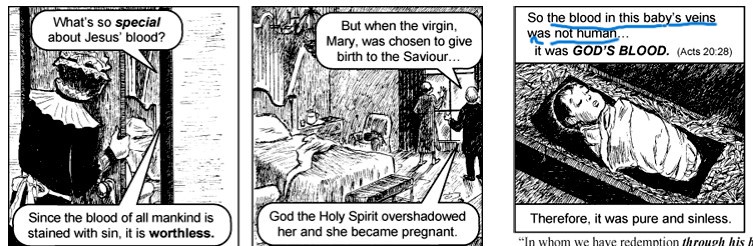
Church history. BTS was strong on this topic, and what might have been a dry topic in other hands was a barrel of laughs from Professor Tom Taylor. As a pastor, professor, and missionary, not a week goes by when I do not connect what we are doing this year with what believers have been doing for two millennia. An example: a new-but-ancient error is creeping around Latin America: that Mary was not the genetic mother of Jesus, but that God implanted a freshly-created zygote in her womb, ex nihilo. To put it crudely, she was merely a surrogate mother. People who teach this do not realize that the error was dealt a death blow at Nicea and First Council of Constantinople in the 4th century. And why did the church fathers reject it? Because they saw that it denied the humanity of Christ! They saw that, if Mary is not the literal mother of Jesus, then Jesus is not the seed of Eve; nor the seed of Abraham; the Son of David; the Son of Man. Thus he is not part of the human race. Thus, he is not our Redeemer. Therefore, we are not redeemed.
Church history urges us to get the gospel right. Some days it’s a matter of life or death.
The person I mentioned at the beginning claims that, “He seeks a fresh approach to following Jesus through the lens of Scripture, without the baggage of made-up traditions and meaningless practices.” His blog is titled, “Pursuing Biblical Christianity.” Sad to say, persons who fancy themselves Lone Wolves have chosen a path of great peril.
“Be serious, but don’t take yourselves too seriously.“ Our professors called us Mister, Missus, Miss. They urged us to take seriously what we were doing. Although they were not hardnosed, they did press for excellence. But wait! They also taught us, by word and example, not to take ourselves too seriously. Our church history professor once said, “When any of you are tempted to think you are a big deal, remember this: if you had been born a couple of centuries ago, you wouldn’t have been a scholar, you would have been following a plow.” At the end of every semester, we would have a banquet: students would portray the professors in a goofy skit; professors would retaliate in the same way.
Avoid the cult of personality, part 1. In my day, some chose a particular seminary because of a star professor. This was particularly the case with Dallas Seminary. Nothing wrong with this! But at BTS, no-one attended because of any one professor. The teachers were craftsmen. Artisans, not superstars. Some might see that as a negative – I regard it as a positive and the path I try to follow as a professor.
Avoid the cult of personality, part 2. This is my subjective observation, but I’ll put it out there: Pastors without sufficient training tend to build their work around their own charismatic personality, and their work rises or falls with a person. O course, yes, there are vanity ministries that are based on educated dynamic leaders (I won’t name them for you!).
Seminary helps give us intellectual humility and counter the Dunning-Kruger Effect. “The Dunning–Kruger effect is a cognitive bias whereby people with low ability, expertise, or experience regarding a type of task or area of knowledge tend to overestimate their ability or knowledge. Some researchers also include the opposite effect for high performers: their tendency to underestimate their skills.” To quote my forthcoming book, Myths that Christians Believe: “In other words, people who know the least about a subject claim to know more than people who know the most. Why? Because they do not know enough to realize how little they know! On the other hand, I know people with doctorates and decades of experience who strike me as being intellectually humble. Why? Because the more they learn, the more they realize how many gaps there are in their knowledge!” People who don’t study seriously are the more likely victims of Dunning-Kruger. To give one example: I cannot imagine anyone with a deep awareness of history and the Bible who could say (see above) “Jesus is all you need and therefore do not go to seminary.” “Jesus is all you need” sounds pious, but it leaves the door open to all kinds of problems. Mormons and Jehovah’s Witnesses believe Jesus is all you need. Word of Faith (Rhema) teachers. Legalists. Liberal Protestants. The pope. Anti-trinitarians. One thing we do not need today are more pastors who are fooled by Dunning-Kruger victims, self-assured pastors who do not know what they do not know. They crave the gift of discernment without paying the price for it. These people are not necessarily walking on thin ice; but they are definitely walking on ice.
They taught me to keep growing in the Word. BTS was aptly named (“Biblical”); our authority was the text and a sound manner of interpreting it (hermeneutics), not a confessional statement. Since leaving BTS I have been equipped to think my way through and change my mind (or confirm my previous beliefs!) in various areas, particularly, eschatology, women in ministry, the work of the Spirit.
Along with that:
Seminary helped prepare me to be a missionary. I have spent 20+ years as professor of New Testament at Seminario ESEPA, Costa Rica. A large portion of my ministry is that I interact with a wide range of doctrines. A week does not go by without me being contacted several times with: “People in our church or friends of mine have heard this.” Or “This sounds strange to me. Do you think it is an error?” Most of these are ideas have already popped up during the history of the church, as I have said; others are notions I had not encountered before. We need to solve the Problem of the Month, but also set our selves to deal with problems that don’t yet exist. So I tell my students: “Listen, I’m not so much concerned with what is going on today. You need to be assembling tools so that you can handle issues which will surprise you in the next year, the next decade.”
Basic Math. The article we cite above states that if you invest years in training, then you are wasting God’s time. I have been told this my whole adult life, and it is sham logic.
Example 1 – in the early 1970s (a half century ago!), I was told, “Jesus is going to come back within the decade! If you go to Bible college, it will be a waste of time!” Wrong! I heard it again with each degree I took.
Example 2 – I heard it again when we went out as missionaries and were planning on spending a full year (!) to learn Spanish. Says someone: “Our church has no interest in supporting you, because you are planning to spend an inordinate amount of time in language study!” I wanted to ask for a definition of “inordinate” but didn’t pursue it. We also hear, “well, everyone speaks English anyway!” Or even worse, “Just use a translator!” (just try to find a strongly bilingual person who wants to follow you around all day, every day, for free). So, look at the math: I spent 1 year studying Spanish; 24 years (to this moment) ministering in Spanish. The one year “wasted” turns out to have yielded an excellent return on our investment. Fact: those missionaries who don’t dig down and get a basic proficiency in the language usually quit at the end of their first term of service. A sad joke: “Whadya call a person who skimped on language training? An ex-missionary!” Since I studied Spanish I have carried out 24+ years of ministry, as opposed to limping along for 25+ years at (maybe?) 1/3 capacity. Or “using a translator”, which is just as bad, since it takes twice as long to say anything!
Example 3 – my students, of course, often remark on how much time it takes to finish their degree. They complain less than my students in the US did! But no matter. I remind them: “A medical doctor requires six years of study in Costa Rica. What if you go to a surgeon and he says, ‘I didn’t need all of that book learning, I got all I needed on YouTube!’ (which is a common source of doctrine for some pastors). Would you hop up on the operating table, or would you run and find a serious person? And what is more important, medicine or the gospel?” The following is toxic advice: “Don’t train to be a missionary, just go!” This philosophy all too often ends in disaster. Not just failure in ministry, but spiritual shipwreck.
Yes, there are self-taught people. But I know of few people who will delve deeply into the range of issues that seminary explores. So, if someone spent, say, three years preparing for ministry and 40 years doing much more effective ministry, I would say he or she did the math and made the right decision.
NOTE:
[1] Peter DeHaan, “The Truth about Seminary.” https://www.peterdehaan.com/christianity/truth-about-seminary/ To prove his point that seminary makes one a worse servant of God is to quote Acts 26:24 – “Paul is the closest example in the New Testament to having a seminary degree. However, this detracts rather than helps. After Paul talks to Felix, the governor exclaims, ‘Your great learning is driving you insane.'” Gary again: yes, that’s right: DeHaan sides with Felix on this one. At the risk of being snarky, I cannot help but ask: If he had taken a course in hermeneutics, would DeHaan have made that mistake?
[2] “It’s foolish for a pastor to go to college where they can kill him spiritually and then to cemetery (seminary) where they bury him…[pastors] need to ask God to give them true spiritual understanding in His Word. Until that happens, education will continue to be a big stumbling block in the church in taking away true spiritual understanding, just as it was for the Jews and the Pharisees in Jesus’ day.” Myron Horst, “Contrary to Popular Opinion, College or Seminary Education is not Beneficial for Pastors” http://www.biblicalresearchreports.com/contrary-to-popular-opinion-college-or-seminary-education-is-not-beneficial-for-pastors/
[3] I rarely use comic books as a footnote (!), but given that Chick Publications had been the source of so much false teaching (for example, that God inspired his Word solely in English in 1611), conspiracy theories, and general paranoia; but their the denial of the incarnation and thus a denial of redeption. See Chick.com: Accident, The.
“Yes, a seminary education helped me!” by Gary S. Shogren, Professor of New Testamento, San José, Costa Rica
 Open Our Eyes, Lord!
I never went to seminary, but I do teach at our church (adult community). I am using your commentary on 1 & 2 Thessalonians and have found it very helpful. I’m glad you went so I can learn from you.
Given Peter Dehaan’s statement of beliefs, he should have taken it more seriously.
Many thanks! Gary
I really appreciate your thoughts on this subject – thank you, and God bless you.
Many thanks, Wyatt!
A thousand and one yeses!
Thanks, Clay, blessings! Gary