 Some material adapted from my commentary on 1-2 Thessalonians in the ZECNT series. It can be purchased from Zondervan, Logos, Amazon. 1 and 2 Thessalonians (Zondervan Exegetical Commentary on the New Testament | ZECNT) | Logos Bible Software
The New Living Translation treats 1 Thess 3:13 as – “May he, as a result, make your hearts strong, blameless, and holy as you stand before God our Father when our Lord Jesus comes again with all his holy people. Amen.” In fact, the NLT agrees with the majority of English versions: “all his saints” (ESV, NASB, NRSV, KJV, NKJV, NET; GW – “God’s holy people”). This introduces into the text a feature that is not explicit – that Paul is speaking of holy people. (I too will paraphrase the text, as seen below; my objection to the ESV etc. is I think the referent is an incorrect one).
From my commentary: The Lord Jesus is accompanied by other holy beings in his parousia, but by whom? “All his holy ones” (panton ton hagion autou; πάντων τῶν ἁγίων αὐτοῦ) is simple enough syntax: it is the substantive use of the adjective “holy.” There are two major interpretations of these “holy ones.” The first is that they are holy human beings—either saints of the old covenant or Christian saints or both. The second is that they are holy angels. A compromise solution is that both human and angelic beings are intended. The NIV, NJB, NAB’s “holy ones” is flexible enough to satisfy all three options.
Human saints? In favor of the interpretation that these are human saints are the many New Testament references to Christians, so much so that “the holy ones” or “saints” (οἱ ἅγιοι) is a semitechnical term for believers. It appears that this is the sense of 2 Thess 1:10, which uses a Hebrew-type parallelism:

This verse does not necessarily contain a reference to Jesus coming with holy ones; rather, the saints glorify and worship him at the point of his revelation. There is one possible NT picture of Christ coming to earth with human saints, in Rev 19:14: “The armies of heaven were following him, riding on white horses and dressed in fine linen, white and clean.” Nevertheless, this interpretation of 19:14 relies on the identification of the armies with saints in 19:7–8: “His bride has made herself ready. Fine linen, bright and clean, was given her to wear. (Fine linen stands for the righteous acts of God’s holy people.).” Yes, they wear fine linen … but then so do angels in Rev 15:6, who are “dressed in clean, shining linen … [with] golden sashes around their chests.” The referent of “the armies” in Rev 19:14 is in the end difficult to pin down.
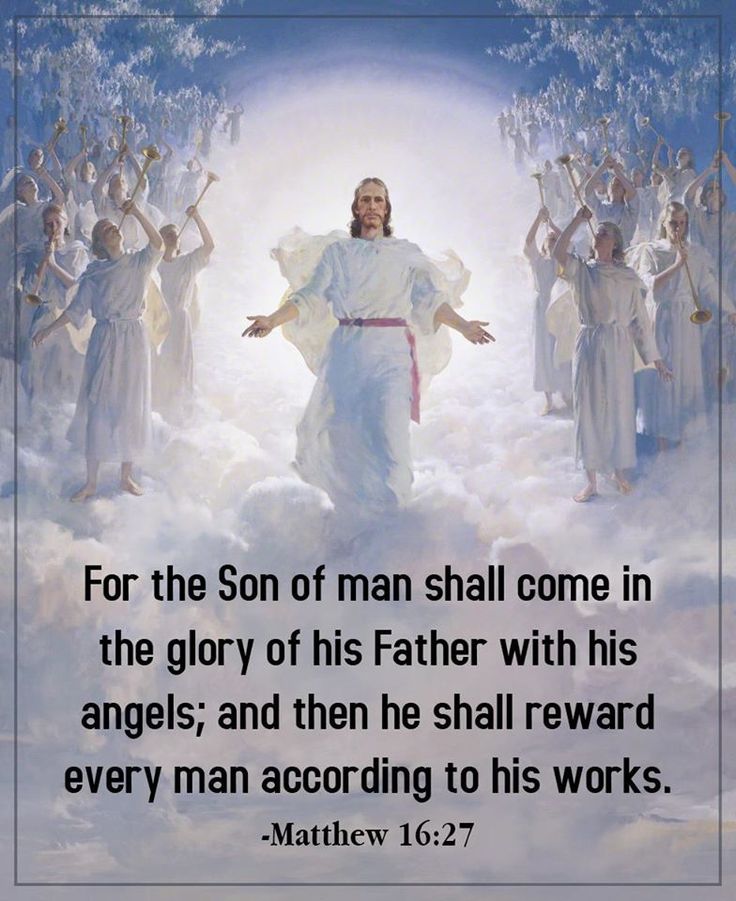
Holy angels? there exist many references to the coming of Yahweh or the appearing of the Son of Man or the parousia of Christ with angels. Deut 33:2 speaks of Yahweh descending from Sinai: “The Lord came from Sinai and dawned over them from Seir; he shone forth from Mount Paran. He came with myriads of holy ones from the south, from his mountain slopes.” In Jude 14, “Enoch, the seventh from Adam, prophesied about these men: ‘See, the Lord is coming with thousands upon thousands of his holy ones.’” This is a direct reference to the pseudepigraphal 1 Enoch 1.9 (ed. Charlesworth): “Behold, he will arrive with ten million of the holy ones in order to execute judgment upon all.” These “holy ones” are angelic, as in 1 En. 60.4; 61.10. Paul’s statement in 3:13 most closely reflects Zech 14:5 – “Then Yahweh my God will come and all the holy ones with him” – giving yet one more Pauline oblique references to the deity of Christ.
In the Matthean version of the Olivet Discourse, the angels come with the Son of Man in order to collect the elect from the four corners of the earth (Matt 24:31); according to 24:36, these same angels do not know the day or hour of the parousia. Angels are also assigned to gather the wicked together for the fiery judgment (Matt 13:39, 41, 49). Besides all this evidence lies the parallel in 2 Thess 1:7: “the revealing of the Lord Jesus from heaven with his powerful angels” (μετʼ ἀγγέλων δυνάμεως αὐτοῦ).
The breadth of the evidence shows that 1 Thess 3:13 refers to angels, as does 2 Thess 1:7.
We conclude that Paul is speaking in 1 Thess 3:13 of how the Thessalonian believers will measure up in the presence of God, at the return of Jesus when he comes with his holy angels.
Zondervan asked that its commentaries in ZECNT provide “expanded” translations; I rendered 3:13 as “with all his holy [angels]”, signaling that “angels” is not in the Greek text. 1 Thess 3:13 describes, we take it, as the same event as described in 1 Thess 4:13–17 – Christ comes with his holy angels and catches up his people.
For my translations of the two epistles:
1 Thessalonians, my own translation for Zondervan – Open Our Eyes, Lord! (openoureyeslord.com)
2 Thessalonians, Shogren translation for ZECNT – Open Our Eyes, Lord! (openoureyeslord.com)
Other Articles:
1-2 Thessalonians and the Olivet discourse
“Does Christ come with his saints or holy angels? 1 Thess 3:13,” by Gary S. Shogren, PhD in New Testament Exegesis, professor of New Testament at Seminario ESEPA, Costa Rica
 Open Our Eyes, Lord!
What do you think?