Reading is a great tool for fending off mental sluggishness and for lifelong learning! I gave a talk on it here: “Christian Leaders and LifelongLearning.” Or to put it another way: “The man who does not read,” said Mark Twain, “has no advantage over the man who cannot read.”
In 2025 I read (or listened to, or viewed as plays) 80 out of a goal of 75. Many were recorded books: when we travel, as soon as we pull away from the house, the word is: “You want to put the book on?”
In 2024 I read 64 books with a goal of 75.
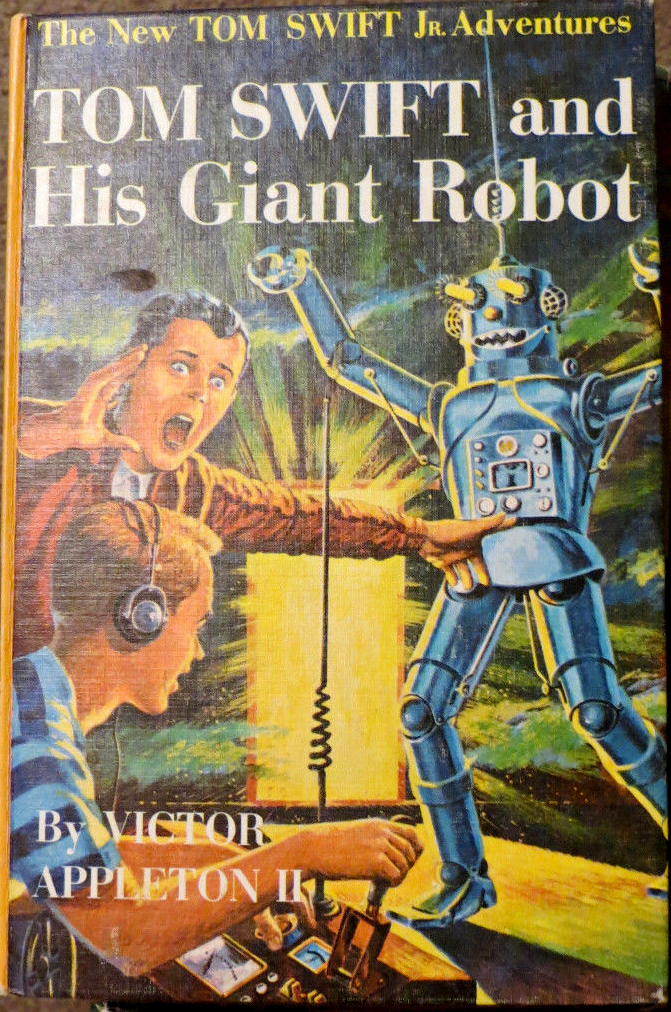
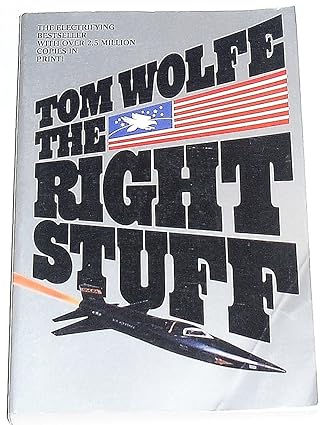
I use dozens of commentaries and other study books for my course prep and other student – the books I am listing here are beyond that list. I like to keep a log of what I have read during the previous year, and then to share it on my blog. The Goodreads.com app keeps track of Want to Read, Currently Reading, and Read. It also allows you to assign tags to the books for genre (history, Brit lit, science fiction, theology, whatever you like) and also source (hard copy, Kindle, Logos Bible Software, Everand, local library). As of New Year’s Day 2026, I had read approximately 2730 books, going back to childhood books – including Tom Swift – and all the way up to last month with Tom Wolfe, whose verbosity turned me off.
I didn’t compose a list of my favorites for 2024, so I will catch up with a two-for-one!
HISTORY
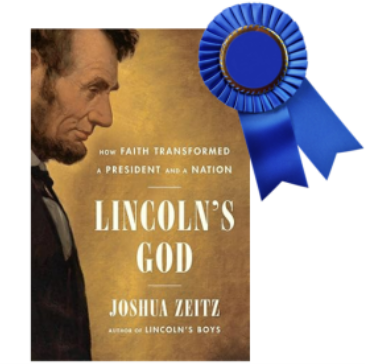
Lincoln’s God: How Faith Transformed a President and a Nation, by Joshua Zeitz. This one man’s faith – or lack of it – has been examined through many lenses. Charles Chiniquy, for example, claimed to be the intimate confidant of the president (there is little evidence that that was true) and thus an insider with regard to Lincoln’s religion. Zeitz actually goes through all the data from Lincoln himself to show that his religion evolved over several decades, from full-out cynicism about the gospel, to faith in a God who would hold him accountable on Judgment Day, and thus a God who welcomed his prayers for guidance.
I give this year’s blue ribbon to Zeitz, Lincoln’s God
Being a fan of Lincoln, and knowing how he revered Henry Clay, I read Heider’s excellent treatment, Henry Clay: The Essential American.
In the case of Ronald C. White, Jr.’s American Ulysses: A life of Ulysses Grant I saw in President Grant – as I had in President Garfield – a president who was Republican on the one hand and at the same time pushing for racial equality and educational opportunities for all.
Gregg Jarrett’s The Trial of the Century is about the Scopes “Monkey Trial”, which pitted famed liberal lawyer Clarence Darrow against ailing Christian William Jennings Bryan. Jarrett does a fine job of describing the context, the daily arguments, and most importantly, showing how the trial of 1925 still resonates a century later.
Lee Miller’s Roanoke: Solving the Mystery of the Lost Colony was a major disappointment, especially given that historical investigation into Roanoke is ongoing. She blames its disappearance on a plot and coverup by Sir Walter Raleigh’s enemies in the royal court – like many conspiracy theories it is based on “could have been”. Her writing style too was not pleasing, hundreds of pages of staccato: “The truth wasn’t lost. It was buried. Under politics. Under fear. Under the silence of men who needed the colony to fail.” I bailed out early in the going.
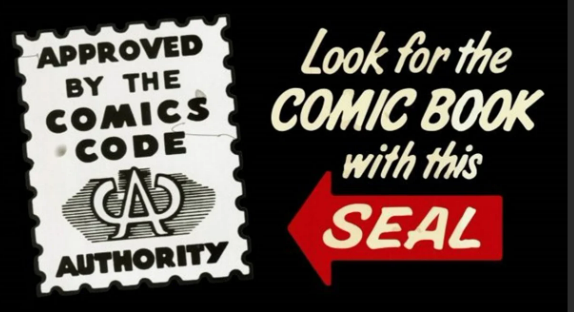
Anyone who studies the comic book genre to any depth will have heard of Fredric Wertham’s 1954 Seduction of the Innocent: The Influence of Comic Books on Today’s Youth. He gives page after page of comic book pages and analysis to prove that they were the root cause of juvenile delinquency, gang violence, and sexual deviance. Wertham became the butt of many jokes, but he actually did have an effect on the worse cases, by their voluntary adopting of the Comic Books Code: a stamp that many of us boys saw on comic book covers every week.
Ben Macintyre has a way of turning spy stories into edge-of-your-seat mysteries. Here is one about a man who was a spy, counter-spy, counter-counter-spy – or was he? Agent Zigzag: A True Story of Nazi Espionage, Love, and Betrayal. He also wrote, The Spy and the Traitor: The Greatest Espionage Story of the Cold War and – my favorite – Operation Mincemeat: How a Dead Man and a Bizarre Plan Fooled the Nazis and Assured an Allied Victory (the latter was twice made into a movie). In a couple of his WWII books, he describes a quiet man working in British intelligence who helped put together some of these amazing counterespionage efforts: this was young Ian Fleming, who during his spare minutes in the way jotted notes for his twelve future James Bond novels.
OUR STRANGE MODERN TIMES
Do you remember back in 2012, when a Harvard professor at the highest level announced that some in the early church believed that Jesus and Mary Magdalene were married? Well, Dr. Karen King will never forget it, since her claim permanently tarnished her reputation. Veritas: A Harvard Professor, a Con Man and the Gospel of Jesus’s Wife (2020) is by reporter Ariel Sabar, who originally pursued the matter for Atlantic magazine and doggedly kept at it for years. The Boston Globe called it “a thriller for eggheads”, which is just about right. I recommend it for all history and theology students and also for those interested in investigative journalism – the story makes an amazing sleuthing tale. Spoiler alert: it turns out she was duped by one Walter Fritz, a failed German scholar who immigrated to Florida and set himself up as a pornographer, who then created a religion that featured pictures of his wife…well, it takes an even weirder turn from there. He then faked an ancient gospel manuscript and fooled a Harvard professor. There is a good Wikipedia summary.

If you don’t live in New York, then you may not have followed the jaw-dropping criminal career of Congressman George Santos. He was finally convicted of extortion and theft and fake degrees and expelled from Congress, but pardoned by Donald Trump in 2025 after only a few months in prison. See Contemporary Affairs. The Fabulist: The Lying, Hustling, Grifting, Stealing, and Very American Legend of George Santos by Mark Chiusano.
Mik Rothschild, Jewish Space Lasers: The Rothschilds and 200 Years of Conspiracy Theories. The author is no relation to the family. I am fascinated by conspiracy theories, and one of the big fish in modern times is that a Zionist cabal or Rothschild family is the puppeteer, pulling the strings behind the scenes and manipulating our world. Marjorie Taylor Greene blamed the 2018 California wildfires on laser beams from space, funded by the Rothschilds, that were meant to – well, it all had to do with solar power in some way, but I couldn’t follow the plot.
HARLEM RENAISSANCE
I thoroughly enjoyed the movie “Passing”, based on Nella Larsen’s second novel. It is informed by Larsen’s own biracial roots, and the anguish of straddling White and Black worlds and fitting into neither. So I decided to read her first novel, Quicksand. The book is aptly named, as it traces the tortured slow fall of a Black woman into the worst life she can imagine. Probably the most depressing book I have read, easily surpassing Ethan Frome on the gloom-meter.
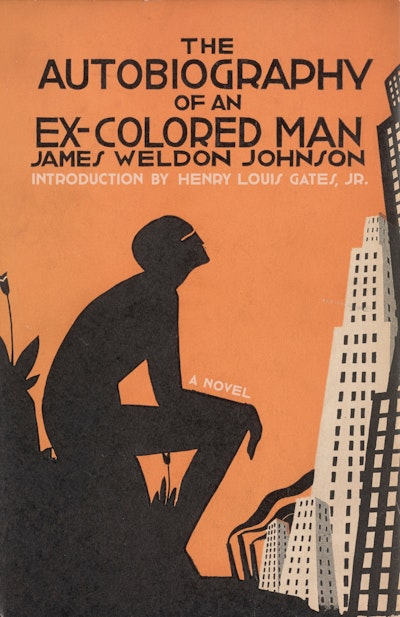
The Autobiography of an Ex-Coloured Man (1910) by James Weldon Johnson, like Passing, was written by a biracial person. It is not an autobiography at all, but fictitious expressionism.
One must also recommend Zora Neale Hurston’s Their Eyes Were Watching God as another terrific example of the Harlem Renaissance.
HISTORICAL FICTION
The Poisonwood Bible by Barbara Kingsolver. This novel is critical of a missionary family to the Belgian Congo, both before and after its revolution in 1960. As a missionary myself, I thought it unfair in many points, and fair in many others.
We visited a missionary friend in Pottstown, Pennsylvania, where he had grown up. He pointed to a section of town that used to be called Chicken Hill and recommended a book. During the 1920s and 1930s it was known for the fact that Jewish and Black people lived and worked together. The fictional The Heaven & Earth Grocery Store by James McBride captures that working-class culture.
MODERN FICTION
I saw the movie “American Fiction” and was impressed, so I read the book it was based on by Percival Everett (Erasure) – warning: Very strong language in the book and film. Also his Telephone, The Trees and James (2024). I liked James the best: it is a retelling of Huckleberry Finn from the viewpoint of “Jim” the runaway slave.
Kurt Vonnegut, Jr., Timequake, is his typical blend of science fiction, wry observations of life, and drop-ins from alter-ego, the make-believe writer, Kilgore Trout.
CLASSICS
Watched a movie production of “Julius Caesar” with Charlton Heston. We saw a staged production of Shakespeare’s “Merry Wives of Windsor” – greatly entertaining, despite its reputation for coming at the lower end of the bard’s canon. Plus I read through Dickens’, The Pickwick Papers, which was very long and – for a first novel – very funny.
CLASSIC BOOKS I SHOULD HAVE READ BEFORE AND FINALLY DID
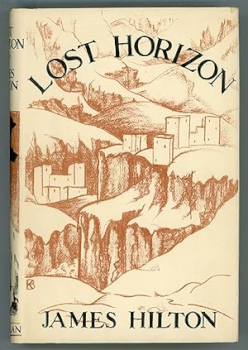
Misty of Chincoteague; Peter Pan by J. M. Barrie (I’ve still never seen the movie or a TV production); Lost Horizon by James Hilton (and I rewatched the movie starring Ronald Coleman, which substantially departs from the book); Ship of Fools, Katherine Anne Porter (also a movie that is on my “watch list”).
BOOKS I REREAD AND WAS GLAD TO!
Aldous Huxley, Brave New World; Larry Niven’s Ringworld, Mote in God’s Eye; Ray Bradbury’s Fahrenheit 451; Kurt Vonnegut, Slaughterhouse Five; Thornton Wilder’s Bridge of San Luis Rey.
BOOK ABOUT ANOTHER RELIGION
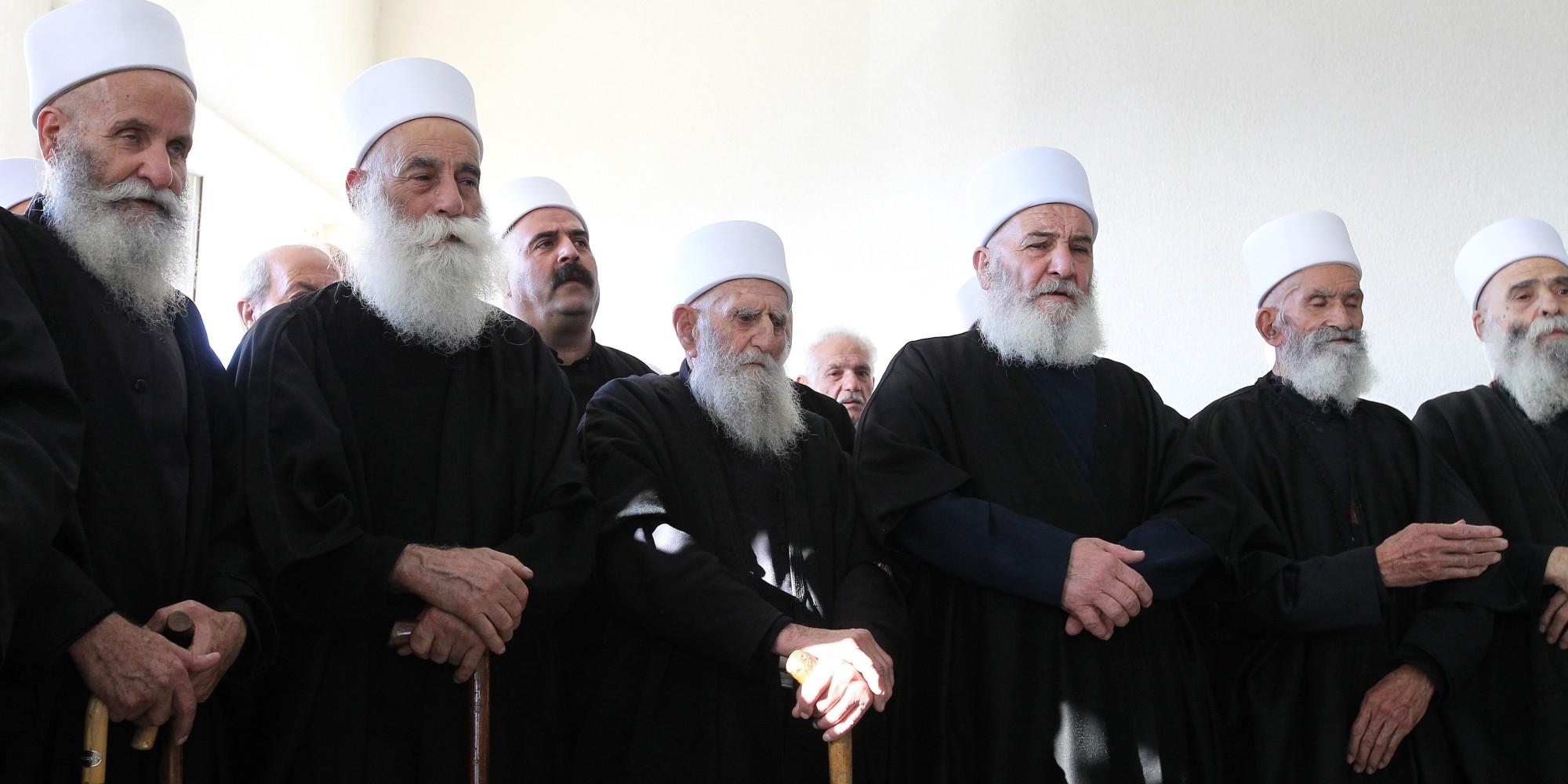
Every year I try to read the Scriptures of another faith: the Bhagavad Gita, the Koran, the Book of Mormon, etc. In the case of the Druze, it is not possible to read their holy books or have first-hand access to their faith – most of it is closely guarded from outsiders. Fuad Khuri’s Being a Druze gives at least a glimpse of Druze life. They have existed in the Middle East since the 11th century. One or two million live today in Syria, Lebanon, Israel, and Jordan, and around the world.
THEOLOGY AND SPIRITUALITY
A Little Exercise for Young Theologians by Helmut Thielicke (TEE-lick-uh). Thielicke was a leading German theologian who was known for his opposition to the Third Reich. A Little Exercise was a speech he gave to students, insisting on the need for humility and connection with pastoral work.
BIBLE IN OTHER LANGUAGES
Every year we start a Facebook club to learn an ancient language or do some extensive reading in the ancient Scriptures. In 2025 we read through the entire Greek New Testament. Apart from the group’s plan, I also read the Latin Vulgate version of the Psalms. In 2026 we are reading the Old Testament history books in Hebrew.
BIBLE IN SYMBOLIC UNIVERSAL NOTATION (SUN)
SUN is a “constructed” language: one that was deliberately created, as opposed to one that developed naturally over the centuries. Esperanto is the most famous of constructed languages; Tolkien created Sindarin for his trilogy; linguist Marc Okrand invented Klingon for the Star Trek franchise. SUN was created only in 2016 by Wycliffe Associates, and I got recruited to work on the project just as COVID was starting. I helped edit the Old Testament, and I am working on the second edition in 2026. In 2024 and 2025 I edited the second and final (for now!) edition of the New Testament. Click HERE to access it. Here is an example:

“Behold. I stand in_front door.” Rev 3:20a
See you in January 2027!
“My Favorite Books of 2024 and 2025”, by Gary S. Shogren, Professor of New Testament, Seminario ESEPA, San José, Costa Rica
 Open Our Eyes, Lord!

What do you think?