From a meeting of one of my classes on spiritual identity:
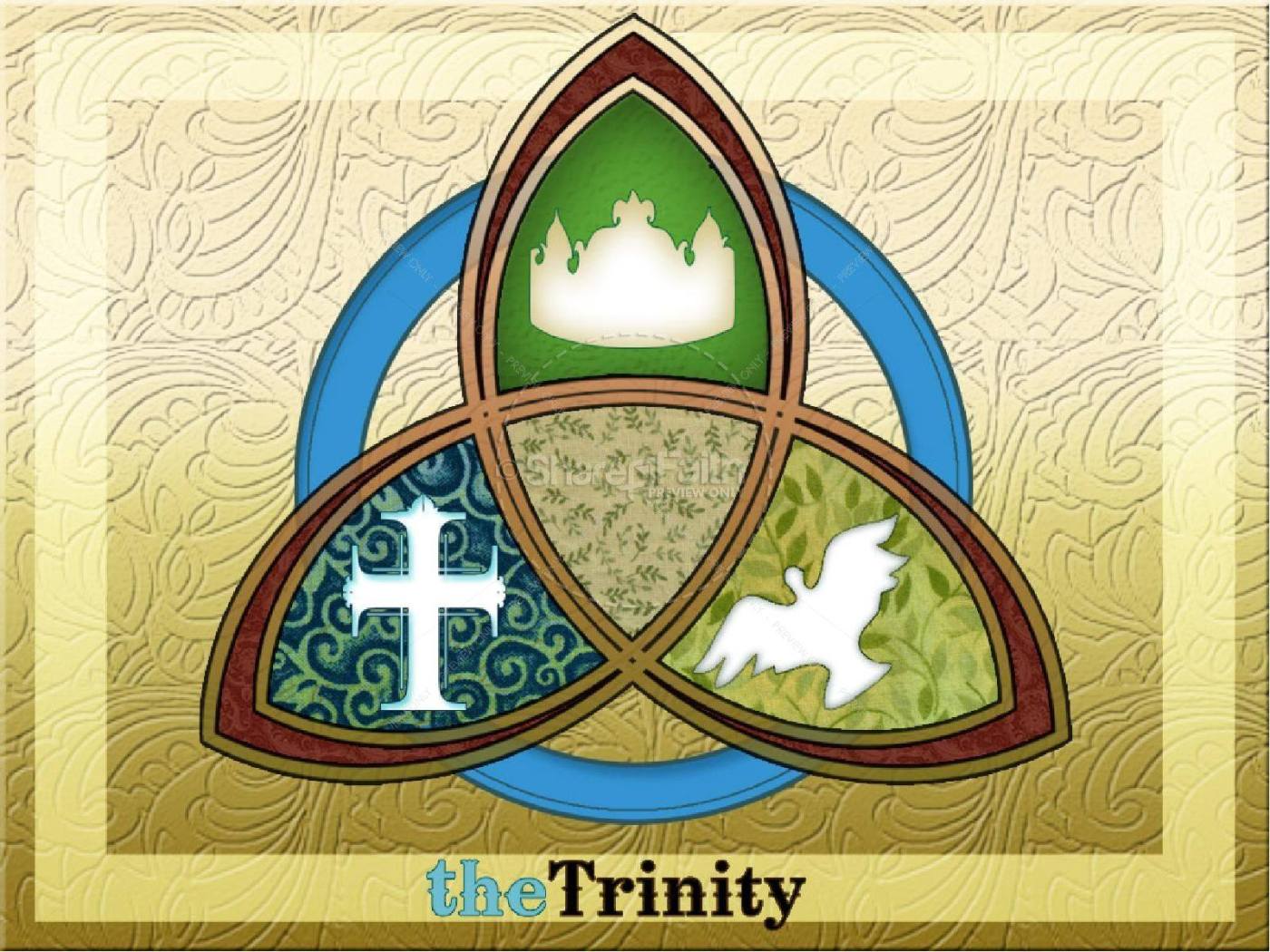
It is only through confessing the Triune God that we can form our identity, because only then can we capture how God is eternally, essentially, a God of love. LOVE IS A VERB, and to affirm that God is love means, he loved for an eternity before we showed up. God is always Father, Son, and Spirit, each person loving and being loved.
Otherwise, he would have been a frustrated Being until he created some other object of that verb, ‘to love’. God would not be essentially love, in that scenario. Instead of “God is love”, the apostle John would have had to write, “God started to love, became loving, became love, is love, only once we arrived on the scene. So, God is love, sure, now.”
Bringing in, “Well, but the angels . . . ” doesn’t help at all. Angels are not eternal either.
We hear from some pulpits this platitude, that, “God only lacked one thing – he needed someone to love, so he created us!” This is often followed by, “So, please, don’t leave God lonesome!” That is nonsense, even on the face of it: if we truly believed that God is eternal but friendless, then God would have existed and would forever exist in a loveless solitude. No: God was never alone nor lonely. He was not like Adam, yearning and hunting around for a companion. God created us simply because it pleased him to show his love to yet another.
Sound theology is the requisite to a sound gospel.
“God was never lonely, and never could have been,” by Gary S. Shogren, Professor of New Testament, Seminario ESEPA, San José, Costa Rica
 Open Our Eyes, Lord!
“God loved for an eternity BEFORE we showed up.”
Just chuckling that a time-oriented limiting word was used in the context of the infinite. A line segment in a line. Or to stretch that analogy: the line segment “needle” in all of three-dimensional space… at any of an infinite possibilities of “time”!
Alas… we’re stranded with verbage (or “nounage”?) that almost always injects some time reference, whether via an adverb or a tense. A challenge would be to present an article on the absence of time without any time-limiting words or phrases in the article! Ponder that… a while!
🙂 Thanks Chris! Oh yes, I was aware of that, that I could only think of time in linear terms. Actually, there has been a long-running question in the history of theology: “When we say that God is eternal, do we mean that time is part of the created order, or do we mean that God in himself does experience time, but not in the way that we do?”
Without looking up, I believe the proponents of these views are Augustine on the one hand, Tertullian on the other.
But I am limited, alas!
While they’re brothers, we don’t need Augustine or Tertullian to be our basis for claiming that TIME “was” part of the “created order”.
In THE “beginning”… could have started “time”.
But I’m pretty sure it could at least start being measured at Genesis 1:5 (but not necessarily in previous verses of Genesis), where “the evening and the morning were the first day.” Subsequently (a time-oriented adverb!), Genesis 1:8 & 1:13 were (another time word, though appropriately so by these verses’ “time”) the second & third days, respectively (i.e., sequentially).
And, would it not be illogical to claim that God did/does/dwill not experience the time that He created?! μὴ γένοιτο! Even if the pre-incarnate state of God did not experience time, though I believe it would be just as impossible for Him to “have missed” (yet another time-related tense) this measurable time thing that He created as it would be for Him to create a rock so big that He could not move it!, Jesus surely experienced the time that He created!
Alas, so much fun to ponder… so little……..!
Thanks!
No, we don’t need Augustine or Tertullian to tell us this, but in that case one could say we don’t need you or me to express our opinions either. 🙂 I mention the two of them mainly because over the centuries, theologians have spoken of the “Augustine view” versus the “Tertullian view.” And both men were looking at “in the beginning” when they set foth their views. Blessings!
quite a good article I must say