In Part 1, I argued in favor of a sharply minimalist use of ancient Hebrew and Greek words during a sermon, especially if there is no compelling purpose or, worse, if the goal is to impress the crowd: it is a pitiable housepainter who departs the job with his scaffolding still up, hoping you’ll notice... Continue Reading →
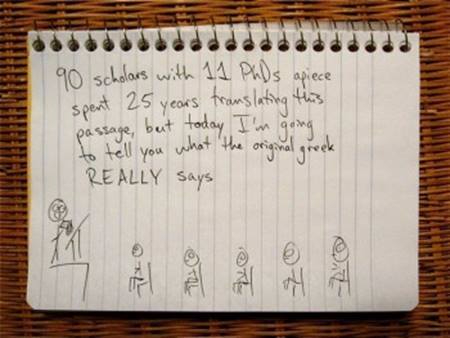
“But the Greek REALLY says…”: Why Hebrew and Greek are not needed in the pulpit, Part 2

 Open Our Eyes, Lord!